Menopause
TREATMENT PLANS
Hormone replacement therapy
Testosterone treatment
Cognitive behavioural therapy
Vaginal treatments
ACCOUNT
Log in
Support
FAQ



Initial test for low testosterone diagnosis
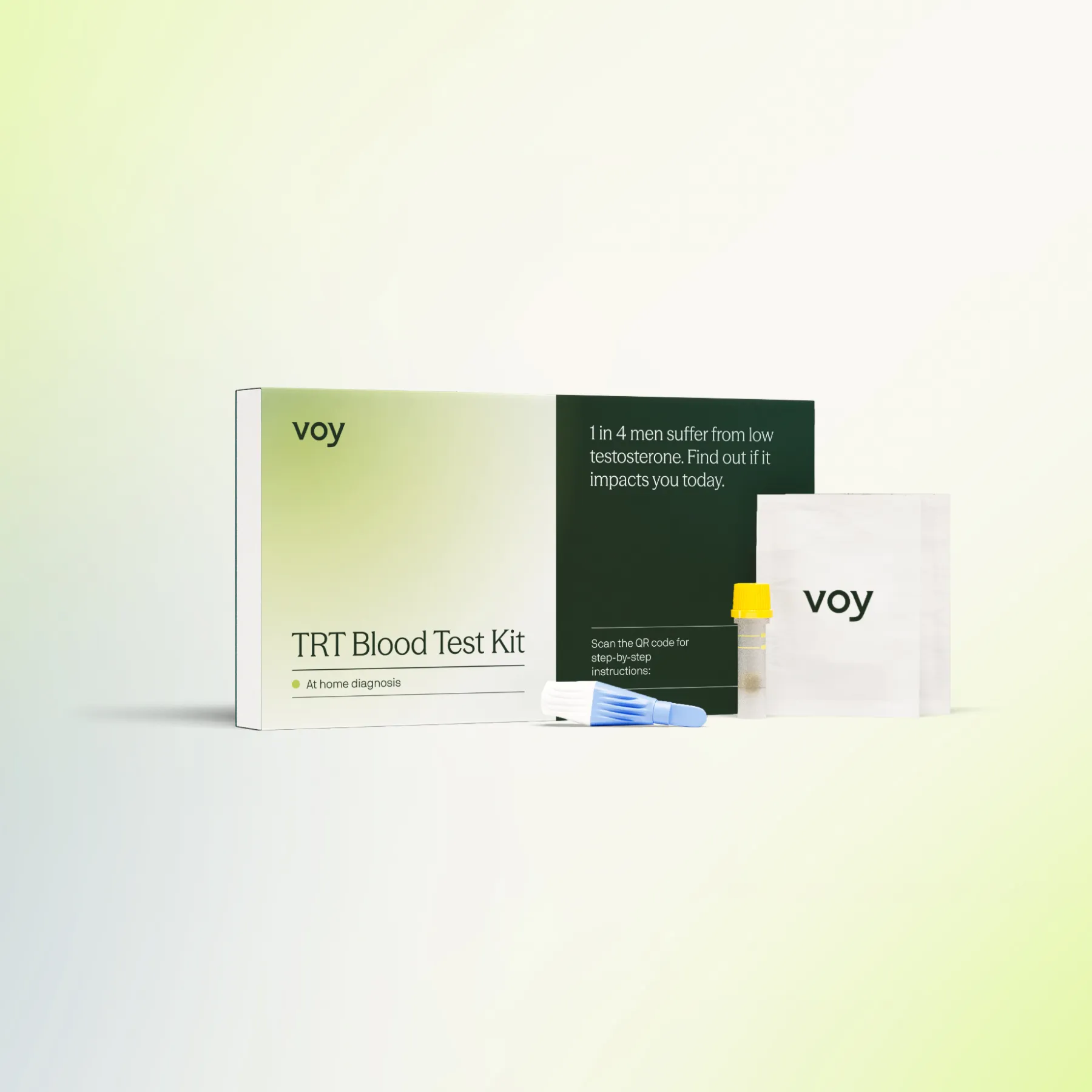
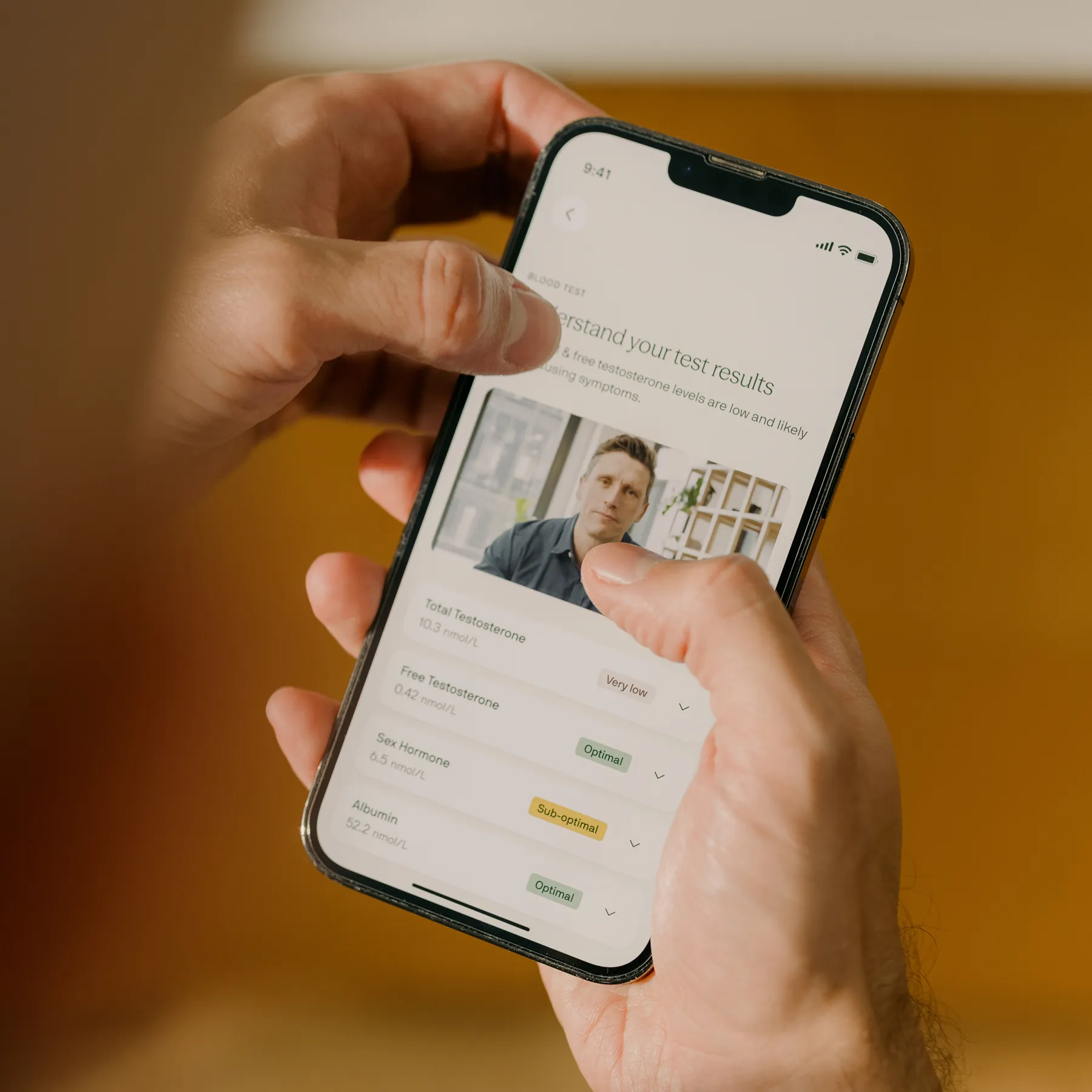
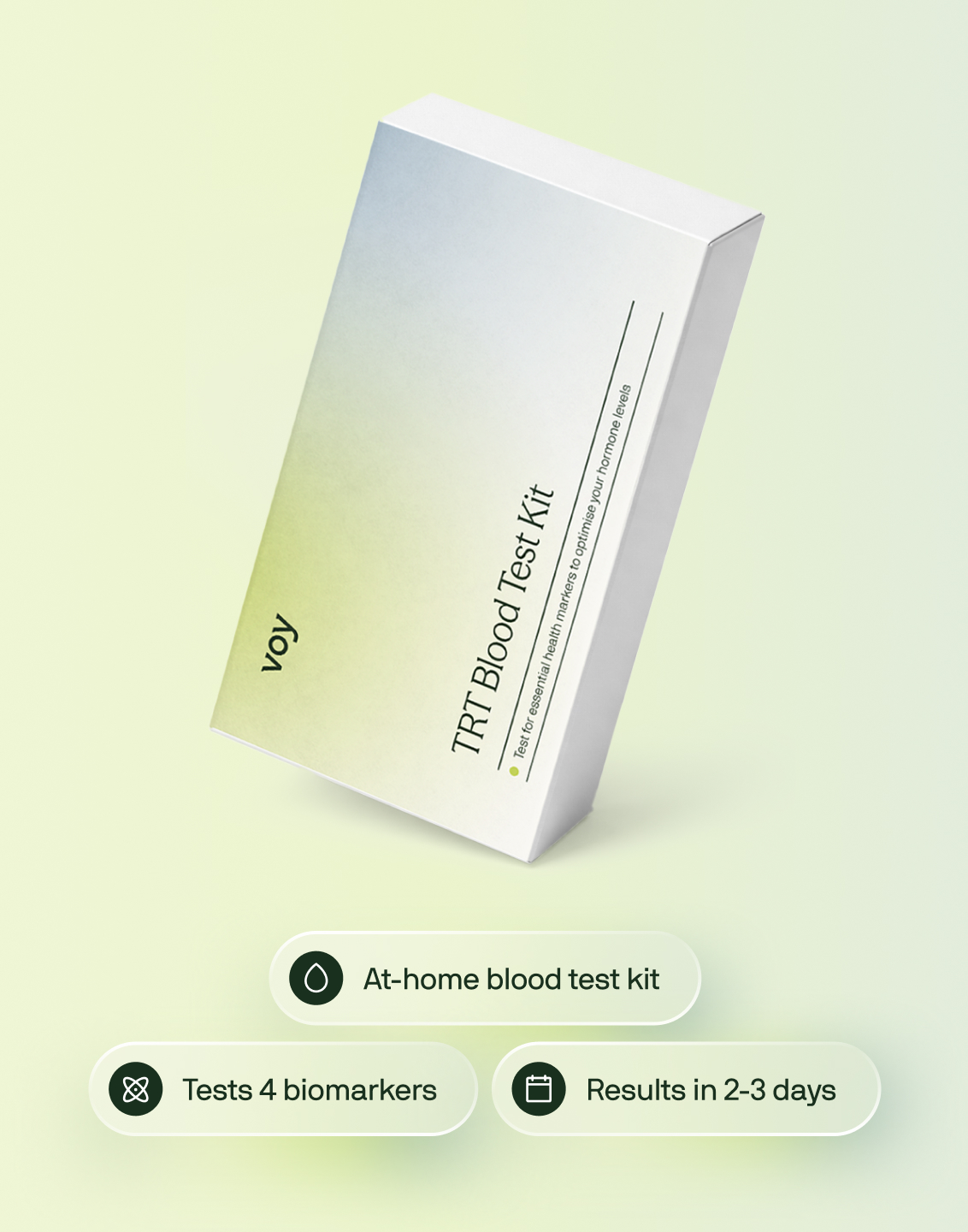
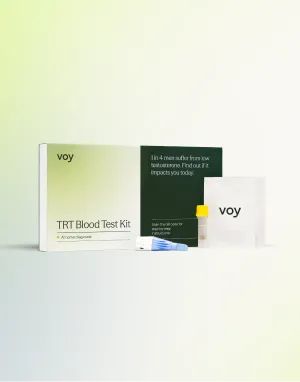
Join 30,000 men getting answers about low testosterone with a quick, at-home test for Total and Free Testosterone — your first step toward TRT eligibility.
.png)
%20(1)%201.png)
%20(2)%20(1).jpg)
%20(1).jpg)
Initial test for low testosterone diagnosis
Join 30,000 men getting answers about low testosterone with a quick, at-home test for Total and Free Testosterone — your first step toward TRT eligibility.
Initial test for low testosterone diagnosis
Join 30,000 men getting answers about low testosterone with a quick, at-home test for Total and Free Testosterone — your first step toward TRT eligibility.
.jpg)
.jpg)
Initial test for low testosterone diagnosis
Join 30,000 men getting answers about low testosterone with a quick, at-home test for Total and Free Testosterone — your first step toward TRT eligibility.





Take the guesswork out of your health. Get tested and move forward with a plan that works for you.
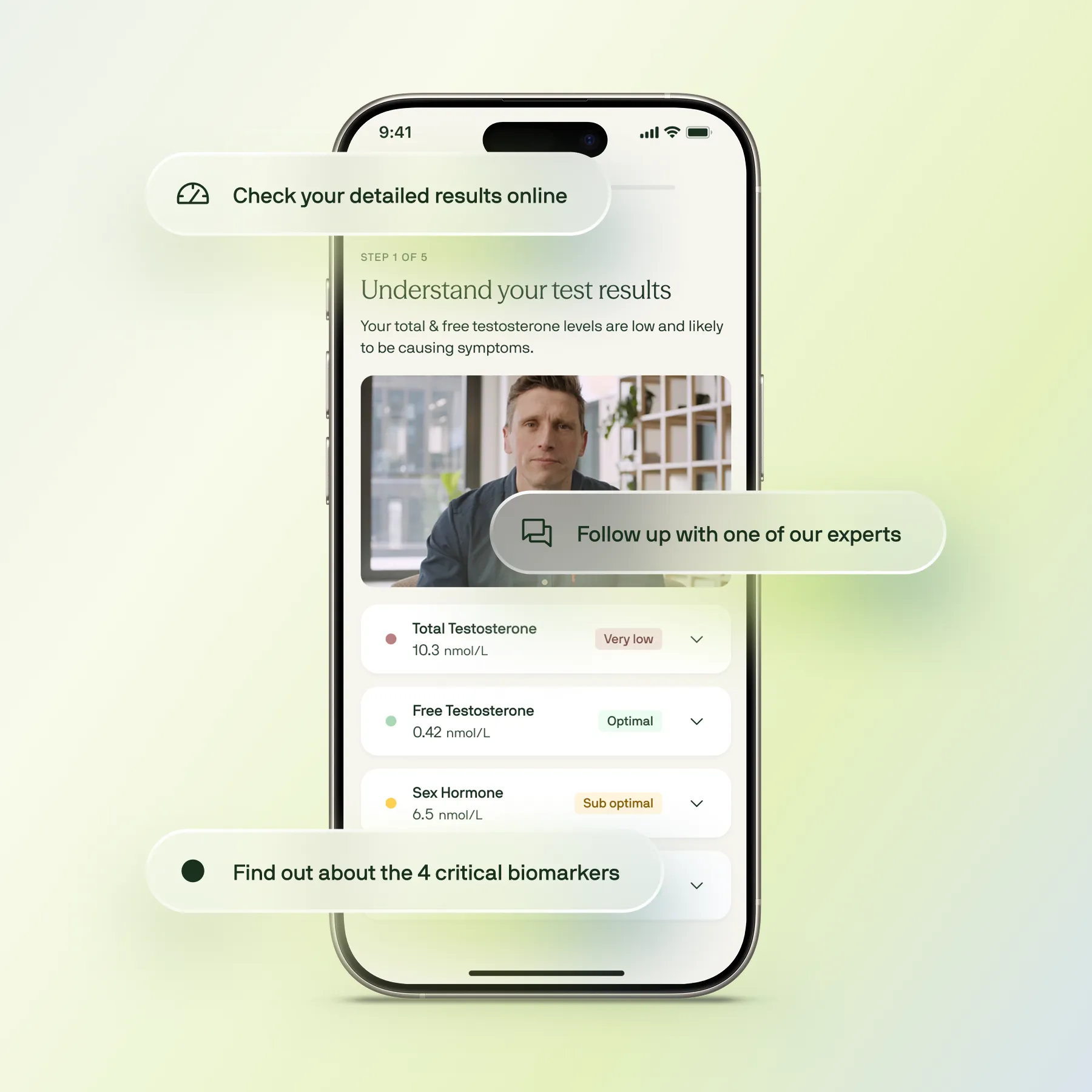

Today's lifestyle is working against men. Testosterone deficiency is becoming more common, affecting energy, motivation, and overall vitality.



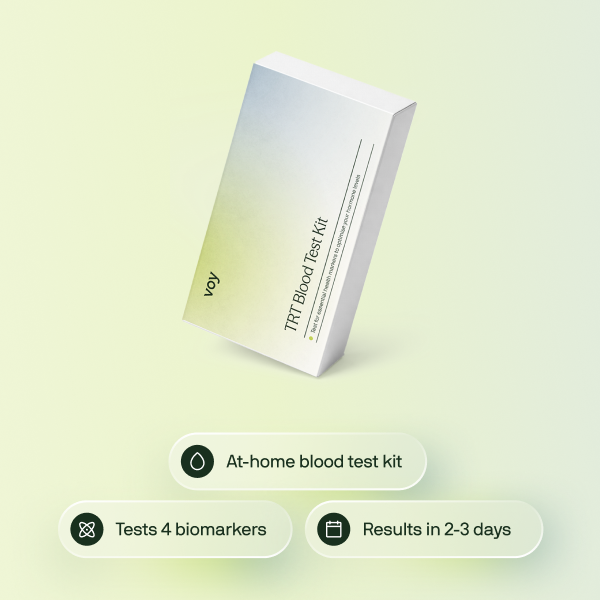
Analysing these biomarkers collectively allows our doctors to accurately measure your testosterone levels and their availability for use in the body.





.png)



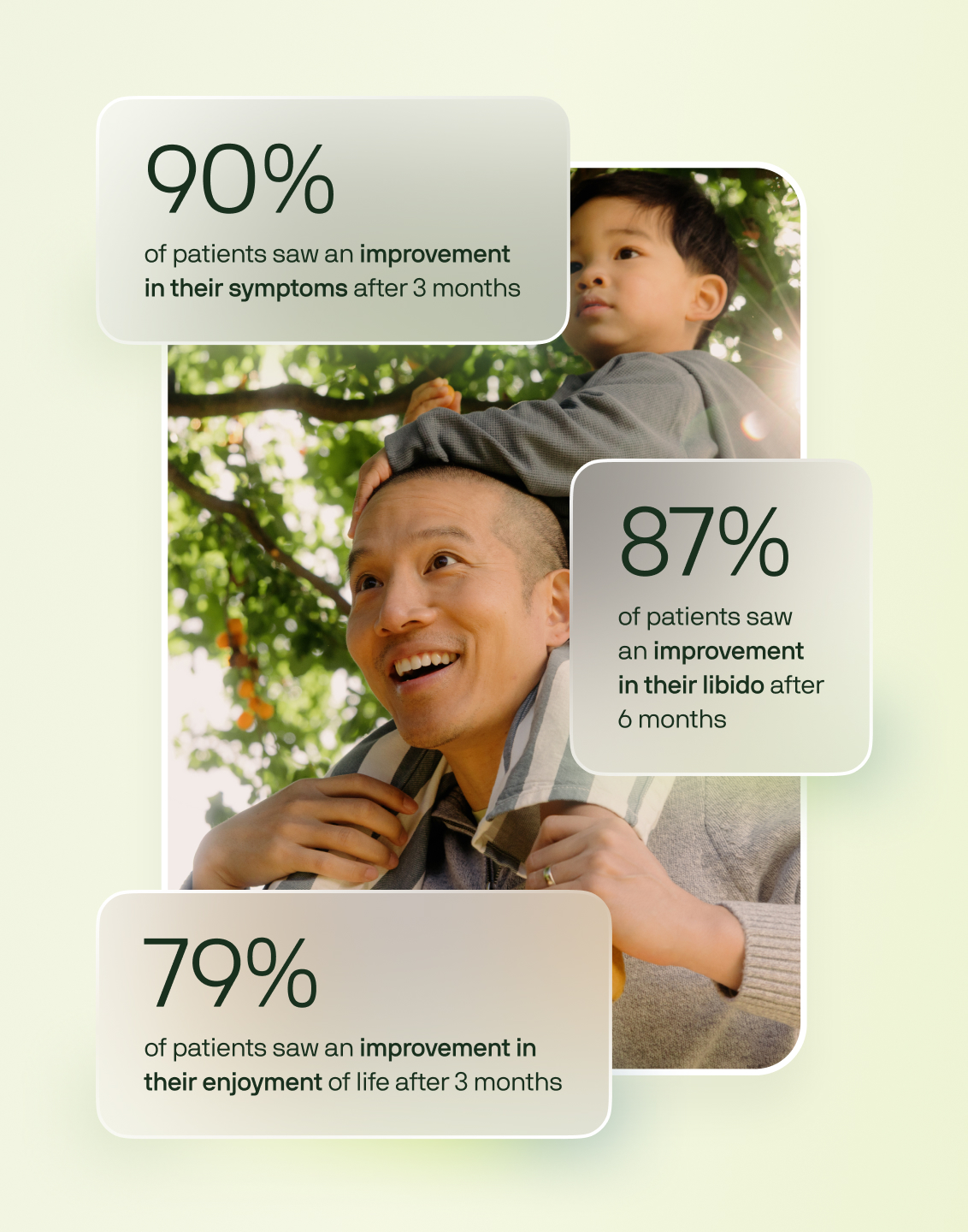
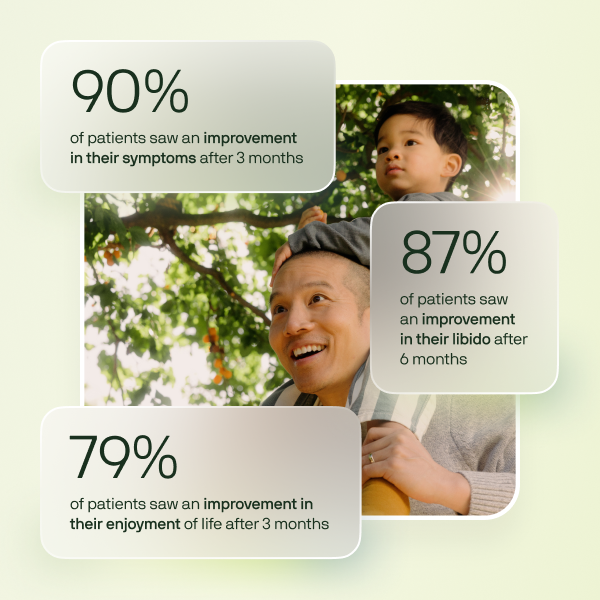
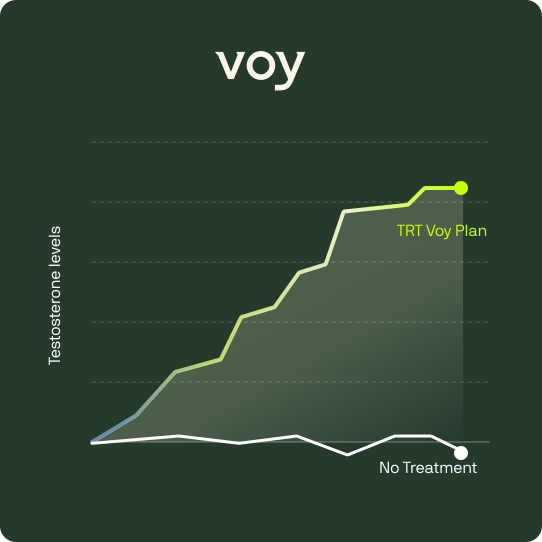
We’ll help you get your testosterone levels back within a normal, healthy range. Our programmes have research-backed benefits to your health and wellbeing. The results can be life-changing.
Look forward to more good days. In a study of over 3,000 men aged 40 to 79, low energy and reduced physical vigour tracked closely with lower testosterone levels.¹
Testosterone can help you get your mojo back. Of 32 symptoms studied in those same men, the three most closely linked to testosterone were all sexual ones, including sex drive.1,2
Testosterone has a bit of a reputation for building muscle and strength. When levels drop, so do lean mass, muscle size and strength.2
It's not just about muscle. Body fat starts creeping up when testosterone dips even slightly below the normal range.2

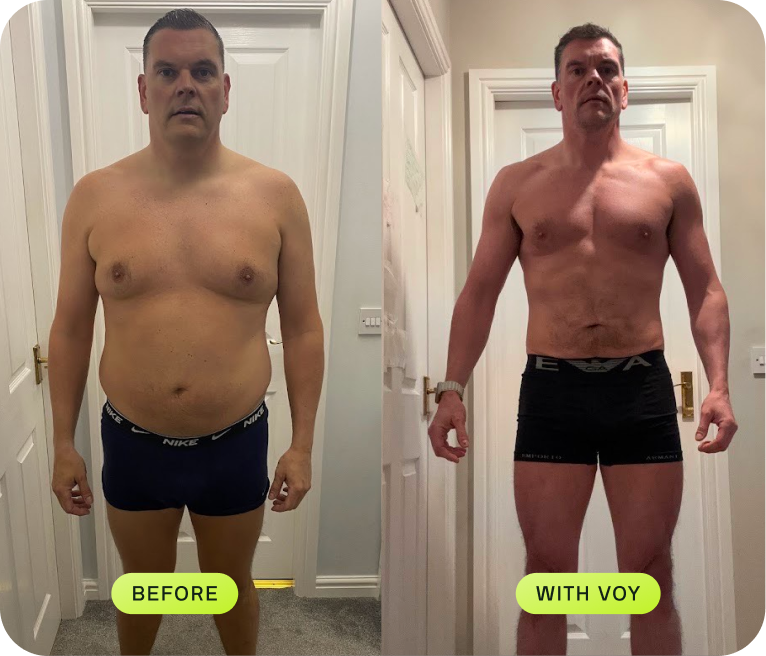
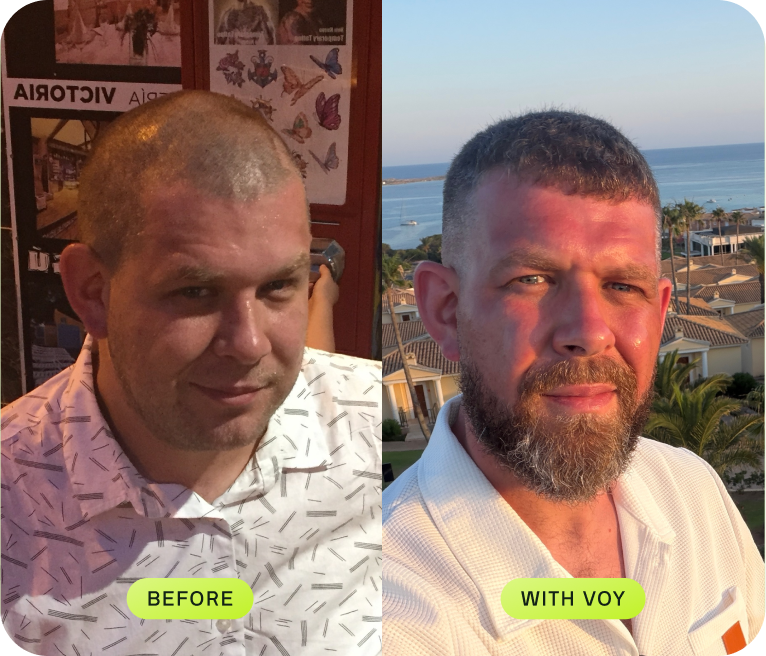
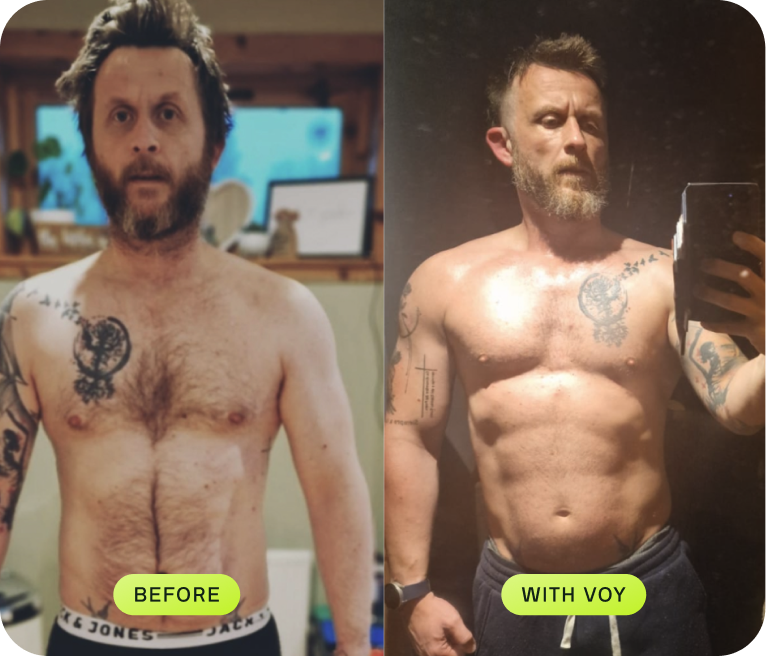

Testosterone deficiency is when your testosterone level is persistently low and you have symptoms that go with it. Some men are born with it, others develop it through age, stress, illness, physical trauma, lifestyle or environmental factors.
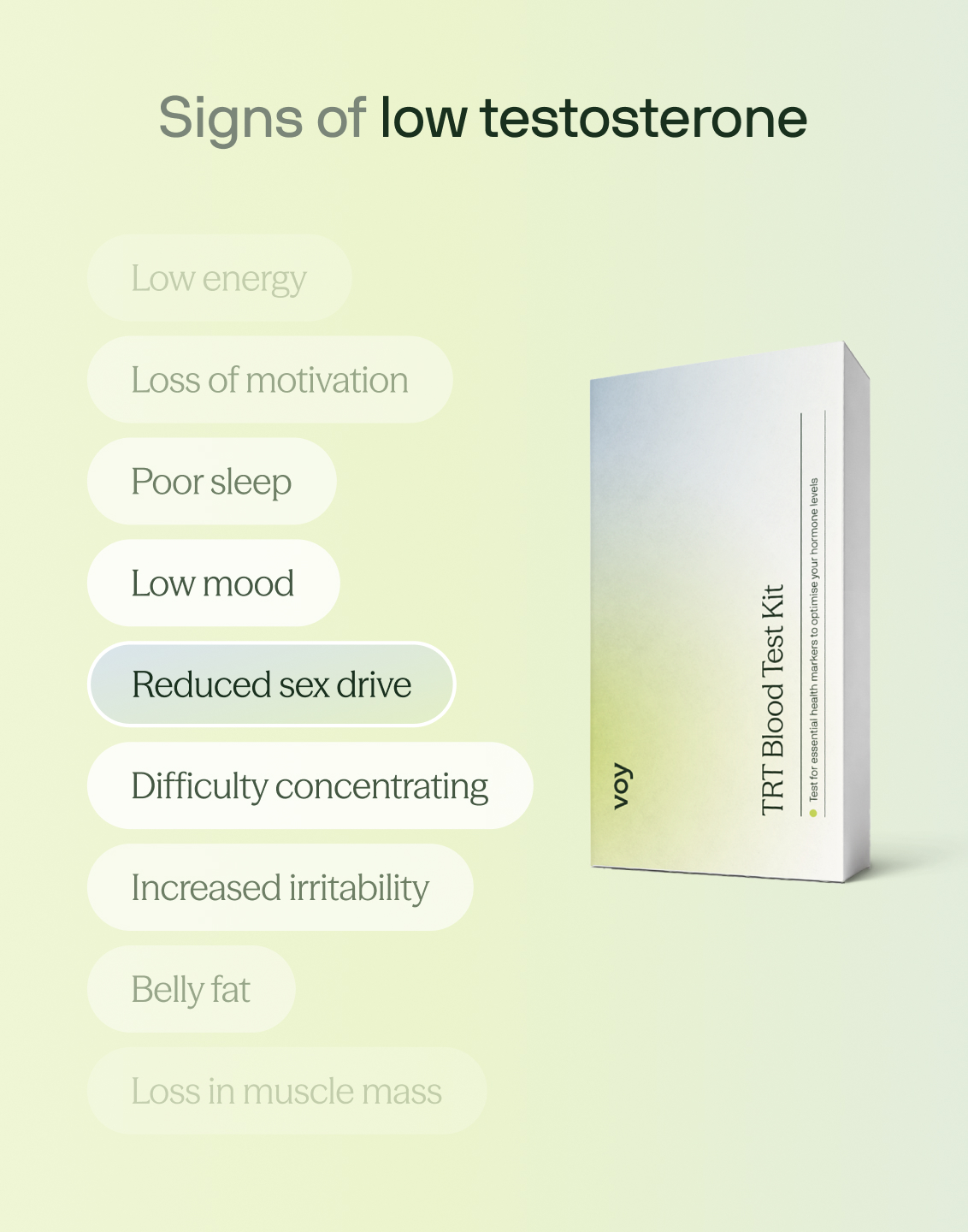
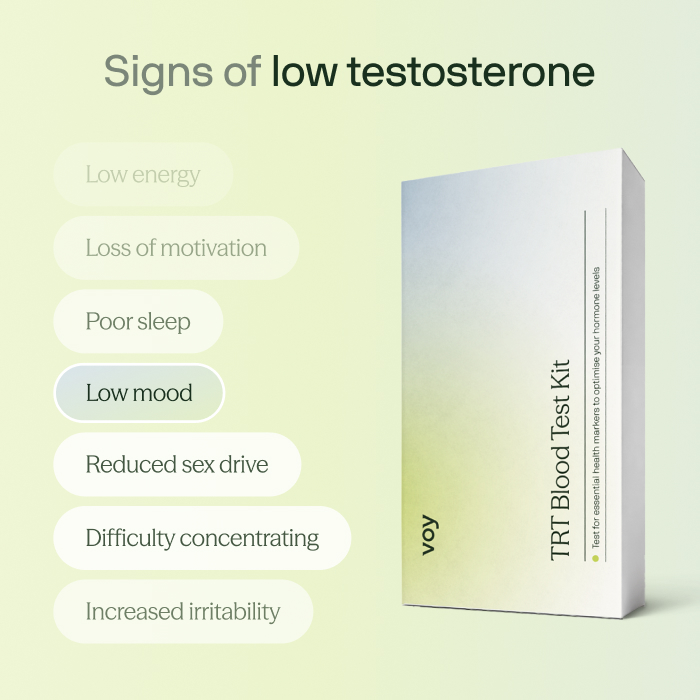
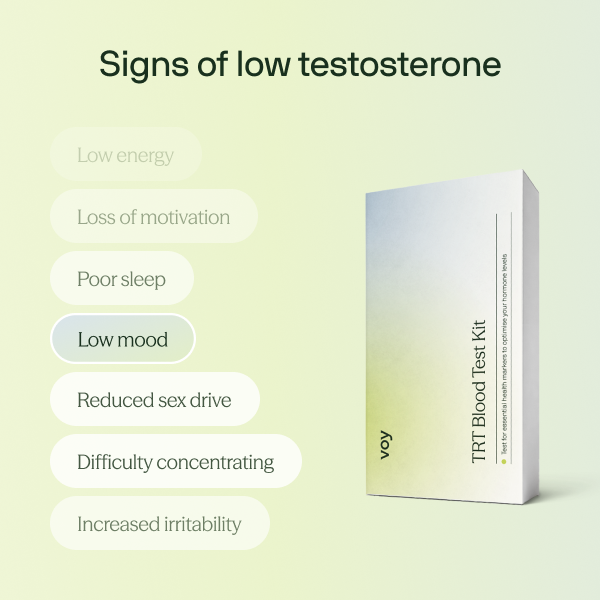
Men with low testosterone often report low mood, irritability, fatigue, anxiety, reduced libido or difficulty achieving an erection. Other common symptoms include brain fog, lack of motivation, low confidence, difficulty losing weight and difficulty gaining muscle. These can also be caused by stress, diet, sleep apnoea or other conditions, which is why a blood test helps: it rules hormones in or out so you know where to look next.
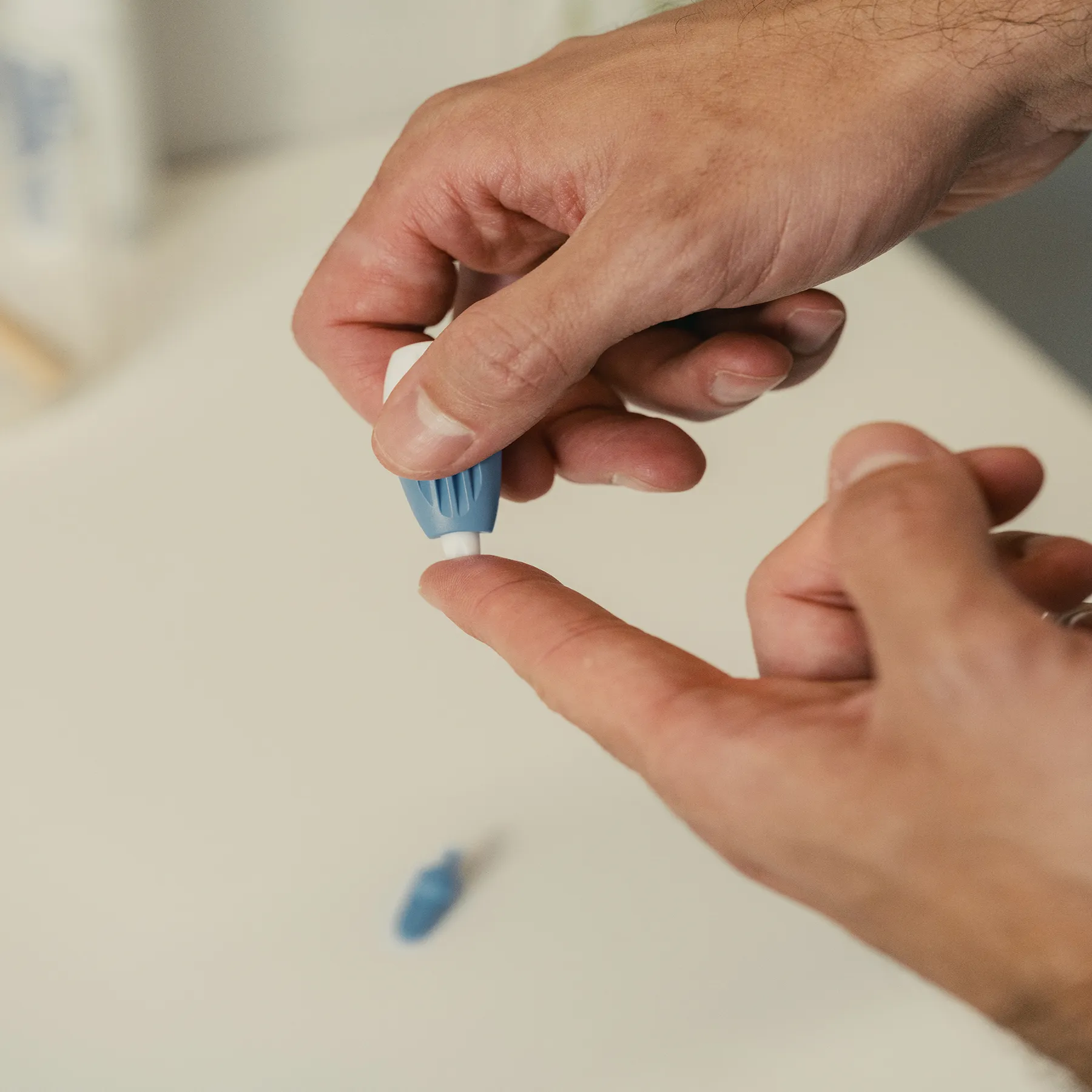
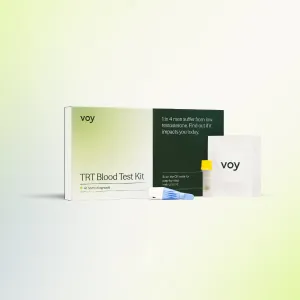
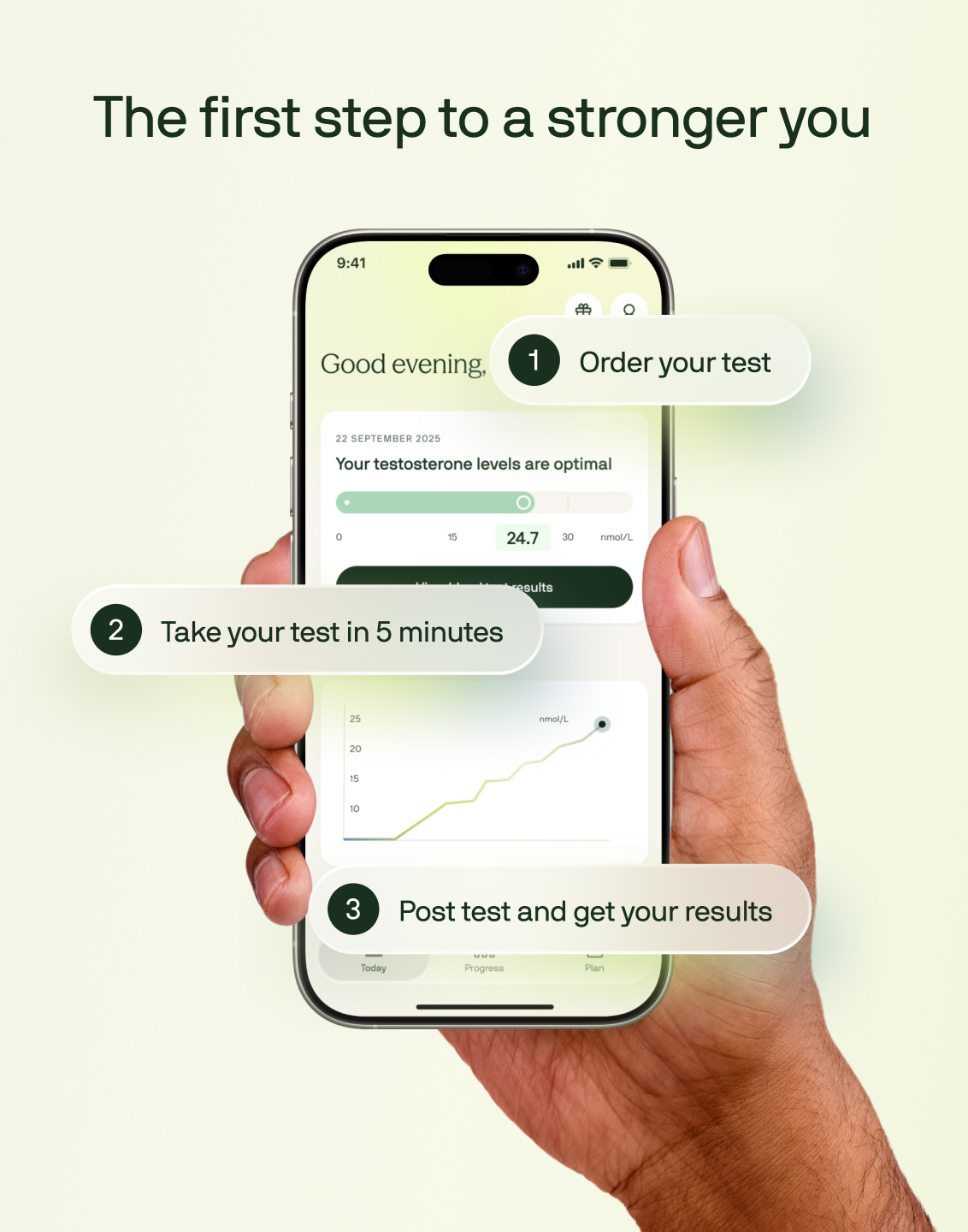
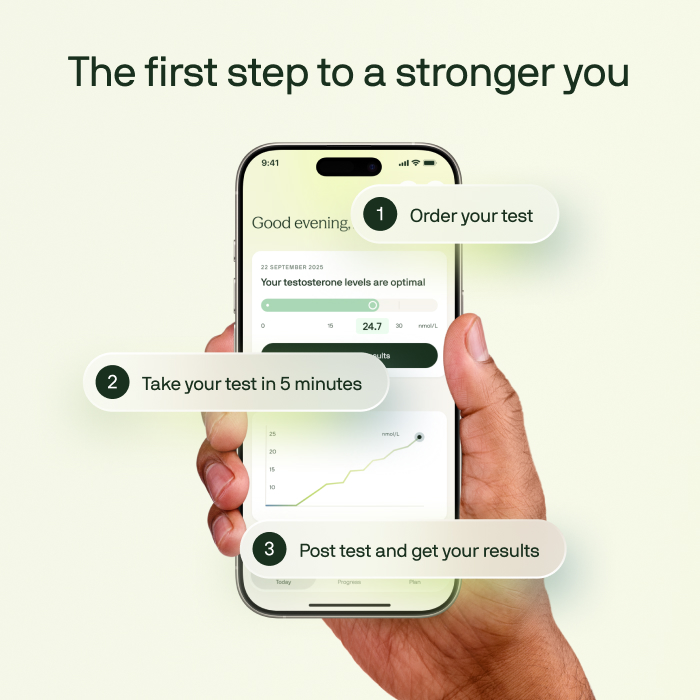
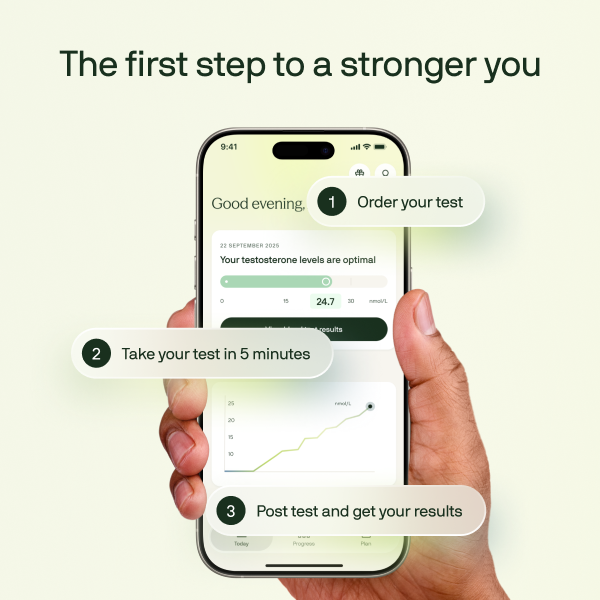
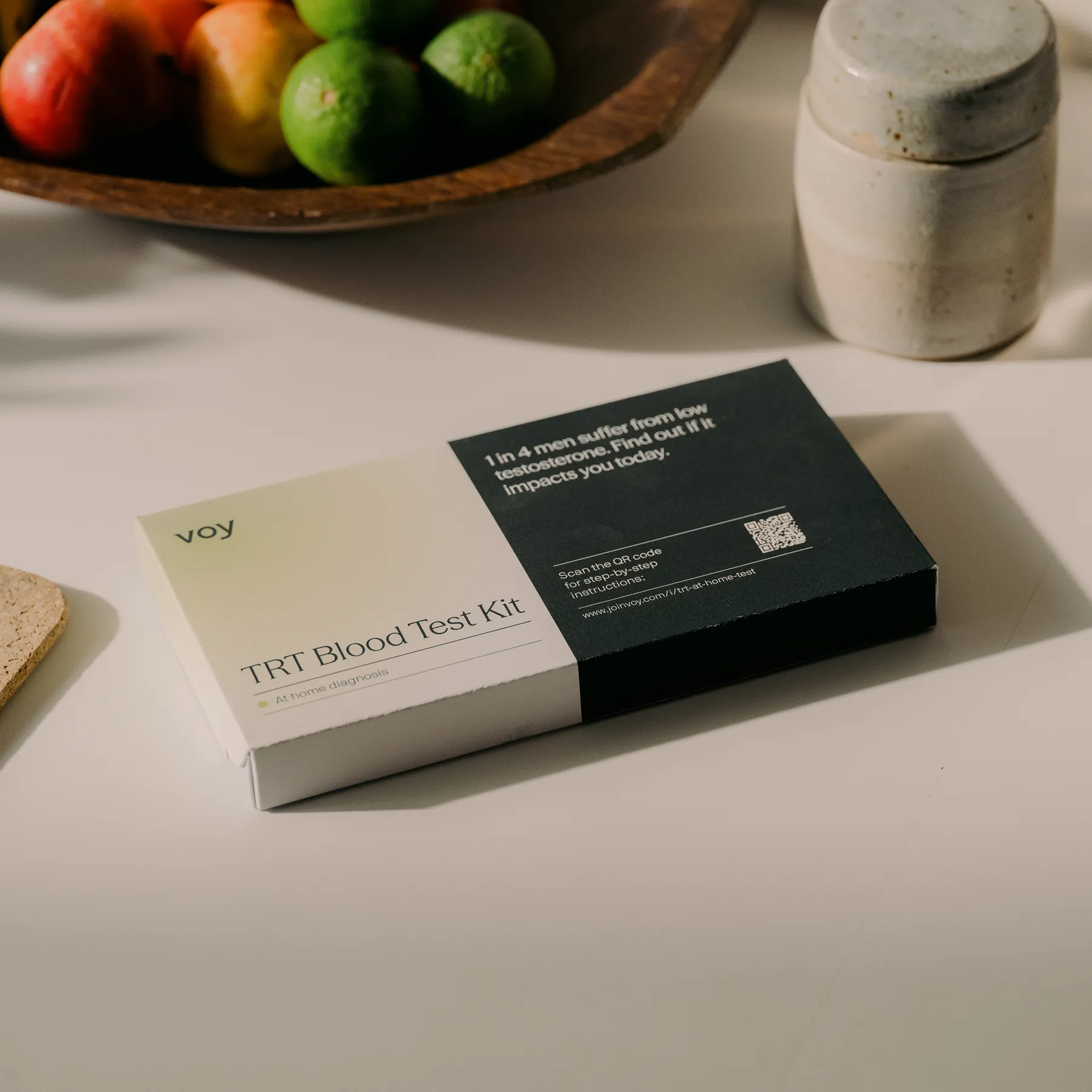
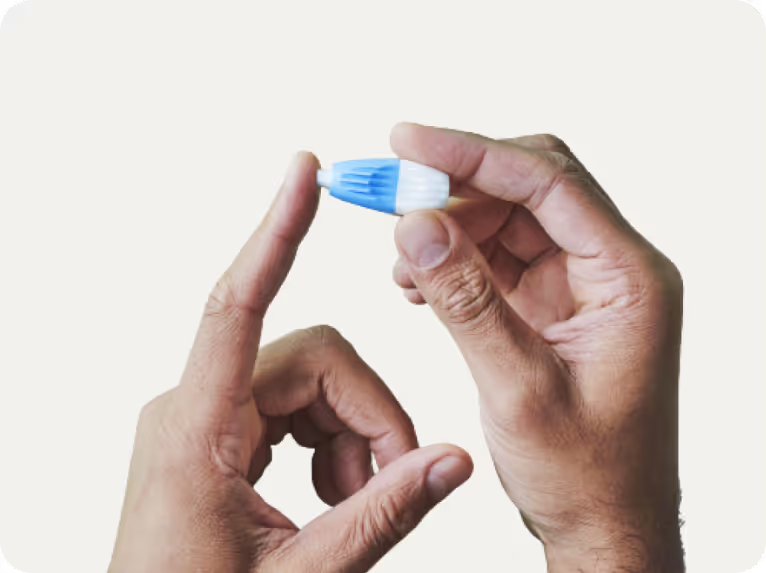
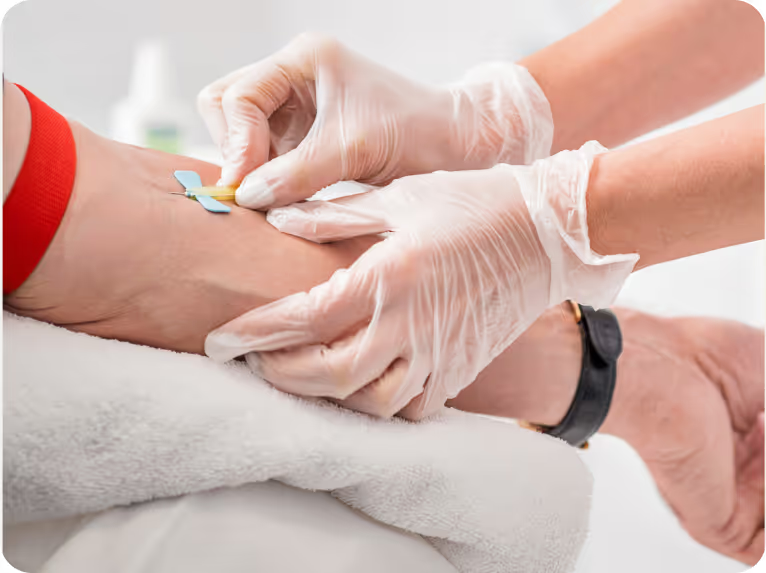
A blood test is the only way to know. Our initial test is a finger-prick test you take at home. If it shows low testosterone and you'd like to go further, medical guidelines require a second, more comprehensive test to confirm your level is persistently low and to give your doctor a baseline of your wider health before you start a TRT service. That one is a venous test, taken by a nurse or phlebotomist.
Yes, gradually. For most men levels drop by around 1 to 2% a year from the mid-thirties. Low testosterone is also more common in men living with obesity or certain long-term conditions.
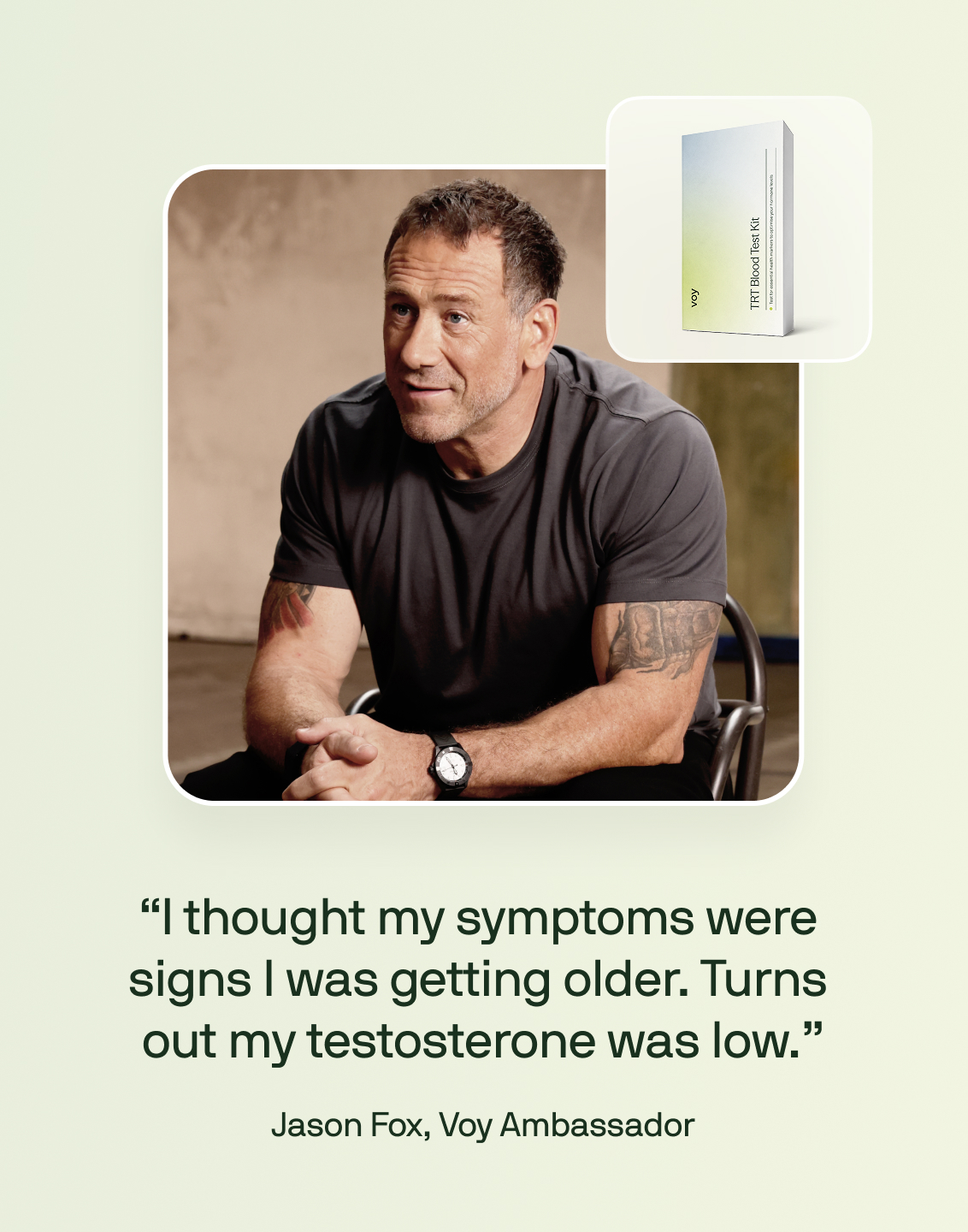
Yes. You'll have a consultation with one of our doctors to go through your results, and they'll talk through whether treatment is suitable for you. Our doctors specialise in testosterone and are all registered with the General Medical Council.
Our blood test kits usually arrive within three working days. It may take longer over public holidays.
For the quickest turnaround, post your sample for morning collection on a working day. We'll come back to you with your results within one to three business days.


Organise your own sample collection

Your venous sample will be collected by a registered nurse at one of our partner clinics.
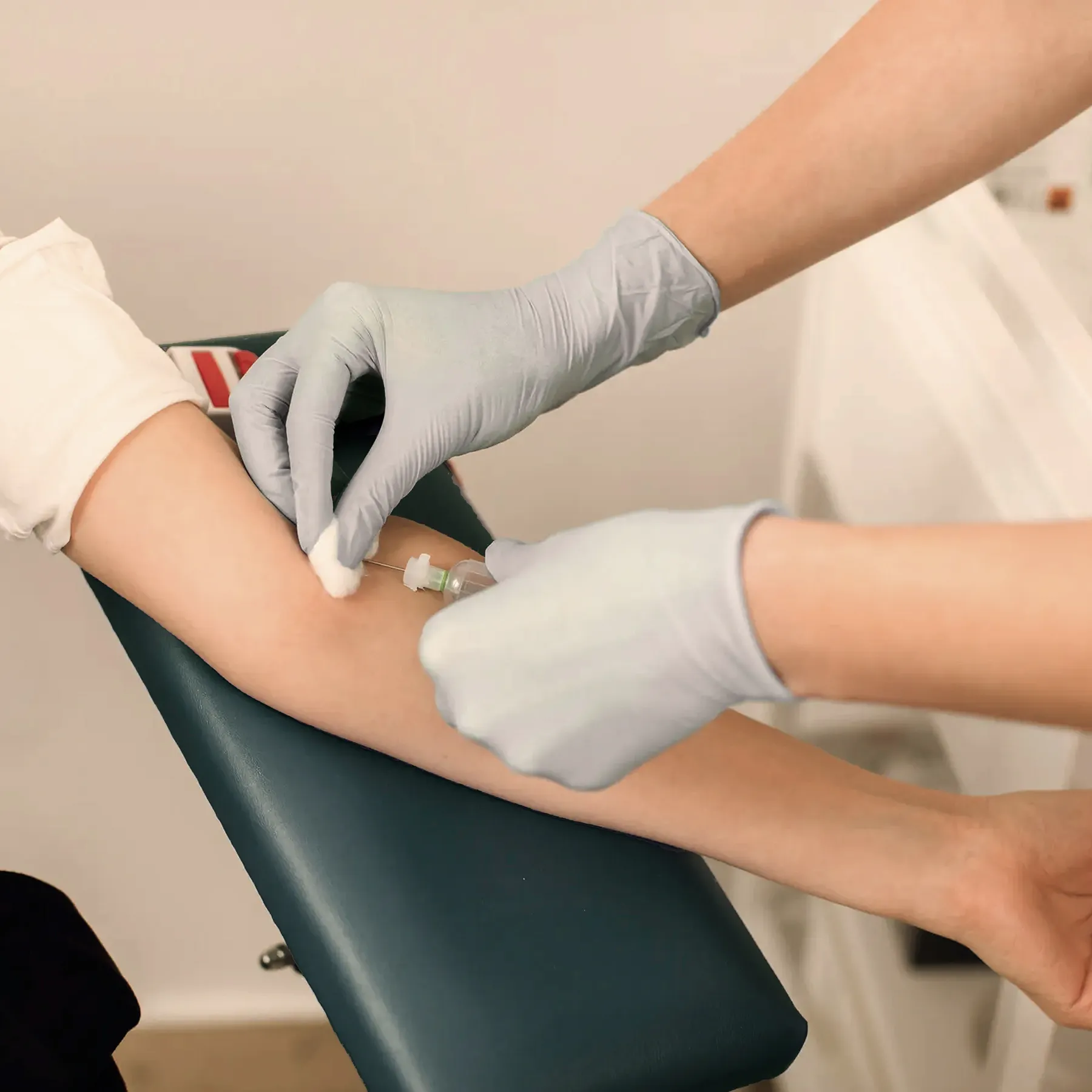
Your venous sample will be collected by a registered nurse from the privacy of your own home.

You’ll have an in-depth discussion with one of our TRT doctors so that they can design a personalised, sustainable protocol for you which results in real improvements. The consultation will cover the following topics.

In cases where injections or topical treatments aren’t suitable, oral testosterone treatments might be prescribed. This method of treatment is incredibly convenient since it involves taking just one daily tablet, and has the added perk of not requiring any injections. This form of treatment helps to maintain fertility whilst increasing testosterone levels, but isn’t effective for some men.

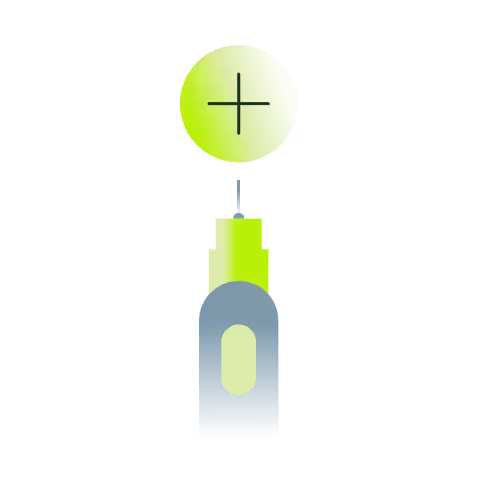
Injectables are a popular choice, in fact, 98% of our patients use this method! Not only are they convenient – taking around 10 minutes to administer, Two or three per week – they’re also highly effective as they maintain steady testosterone levels over time. Having said that, not everyone likes the idea of having to inject themselves with medication, so they aren’t for everyone.
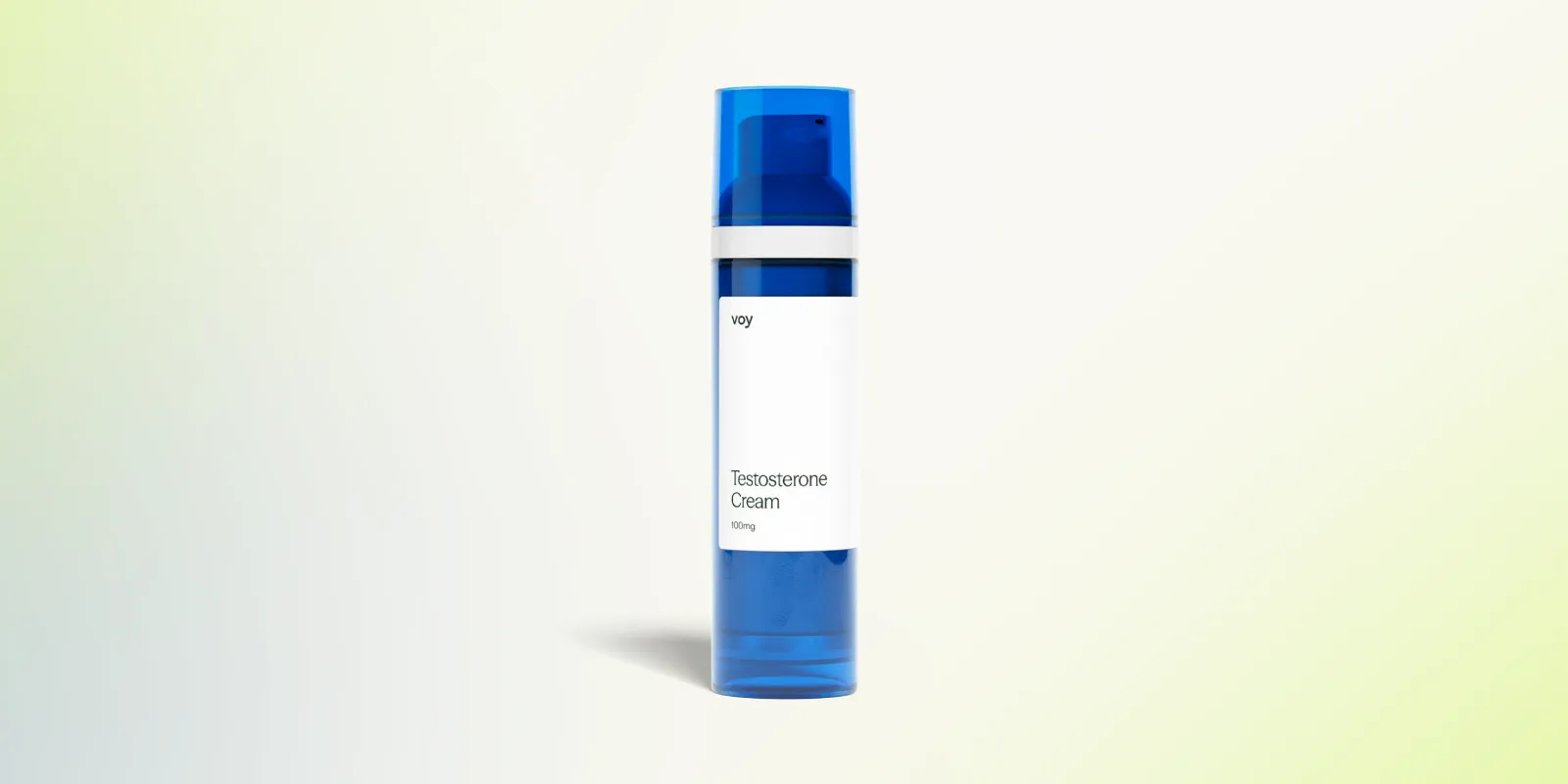
Topical testosterone treatments are a great option for those who prefer a needle-free approach, as they come in the form of a cream or gel. They’re applied daily and although they work well for some men, the overall outcome of the treatment can be affected if they’re not absorbed properly.
Regular monitoring is essential to ensure your treatment remains safe and effective. Your TRT doctor will check in with you at the 5-week mark, and further blood tests (now included free with your subscription) will be conducted at 3, 6, and 12 months. These tests allow your doctor to track your progress, identify any side effects, and make precise adjustments to your treatment plan. Our monitoring blood tests, normally £70, are now completely free as part of your plan.
.png)